Tuesday, April 21, 2015
Starving for Another Taste of "The Hunger Games"
Reading The Hunger Games for a second time around has been quite a different experience from what I expected it to be. In all honesty, I regarded the rereading as mildly interesting, an easy and mindless read, and not much else. However, Suzanne Collins has managed to recapture my interest even more strikingly than the first time I read it as a mere seventh grader. The story now holds so much more depth and meaning now that I myself am a sixteen year old girl, not all that much different from Katniss Everdeen in that I am simply trying to stay true to myself and my beliefs, while also trying to survive and prosper under the weight of an all-too-common societal oppression. Where Katniss is rough around the edges, and uses her harsh personality to mask any vulnerabilities, I, much like many other teenage girls, hide my true self under layers of makeup, attitudes of not caring, and an abundance of teen angst. The parallels between Katniss and many of adolescent female America are remarkable, making her even more of an inspiration idol, especially the second time around.

Friday, March 13, 2015
The Road to A Great Movie
 The movie The Road, based on the book by
Cormac McCarthy, was shocking even though
I knew what would happen next, and disturbing
even after having read each event in vivid detail.
This is because the filmmaking was executed
perfectly. Dark, gloomy, and filled with ash (as
much as the beginning of the book emphasized),
the hopeless wreckage of the man and the boy's
lives were perfectly depicted. The casting was
phenomenally done as well. Viggo Mortensen
and Kodi Smitt-McPhee captured the desperation
and fear of McCarthy's post-apocolyptic world. I could see
the hunger in their eyes, feel the dust of burnt out dreams on their
fingertips, hear the sound of their hollow emotions with every footstep.
The Road established this beautifully tragic sense of disaster; tragic in the raw and
brutal world of ruins that lay around them, but beautiful in the improbable hope
and light found in the character of the boy. Yes, McCarthy was the creator
of this character, but it was the creators of the film that truly brought
 the boy to life, as well as McPhee himself, who was able to endow
in the boy the kind of crushing fear and sense of lost that makes
the audience almost taste it. The underlying current beneath
the fear, however, is a glimmer in the boy's eyes, some
telling way that he speaks, moves, and reacts that
somehow communicates that he will survive. It is as
if he and the man are sacred, like they are carrying the
fire but it is more than a torch, it is an eternal flame. There
is only so much that can be communicated in unspoken words
and unused punctuation in McCarthy's writing. The movie, however, speaks volumes for the little humanity that remains in the world of the man and the boy. This sense of goodness, contrasted with the horrifyingly vivid images of burned corpses, or, even worse, the half eaten
And very much alive people found in the basement of a cellar. This imagery,
unable to be truly captured in the pages of the book, make the movie so
much more real. From the eerie quiet, to the uncensored filth of the
human body, the filmography of The Road makes it one of the
most frightfully honest and accurately depicted movies,
both as a book adaption, as well as on it's own,
of today's dystopian-obsessed youth era.

PS. The Road reminds me of the lyrics to that Justin Timberlake song...
"I turn my head to the East,
I don't see nobody by my side,
I turn my head to the West,
Still nobody in sight
So I turn my head to the North
Swallow that pill that they call pride
That old me is dead and gone
But that new me will be alright
Oh, Ive been travelin' on this road too long
Just tryna find my way back home
The old me is dead and gone
Dead and gone"
Tuesday, February 24, 2015
Preppy to Prepper
According to National Geographic Channels quiz, "How Prepped Are You?" the answer in my situation is not at all. This quiz is based off the popular reality show "Doomsday Preppers", which centers on different people across the U.S. who all share in an obsession of being prepared for when the apocalypse arrives. I scored a mere 11 on the quiz, estimating my survival time to be about 1-2 weeks, and meanwhile the top scorer featured on the show received a 95 with an estimated survival time of 24 months. This quiz brought to light many factors of survival that never even crossed my mind, such as what kind of items I have available to barter, but also made me realize how paranoid some people are to actually obtain some of the items mentioned in the quiz, such as stocked bunkers, or getaway cars. Most importantly, I have learned that being a prepare is not for me, and I would prefer to live out the remainder of my days in the case of an apocalypse by mooching off the supplies of others.
Thursday, February 12, 2015
"The 100" Reasons Why Post-Apocolyptic Television is Awesome
So the title may have been a bit of an over exaggeration. Though I can't list 100 reasons, I can list a solid three:
1. As interesting as the end of the world is, seeing how people rebuild society in the aftermath is even more interesting.
2. Even creepier than bad things happening is what the silent world looks like after it has already happened, and seeing the product of disaster.
3. It encompasses both hope and inspiration, as well as eeriness and suspense, the former of which is not usually found in other forms of dystopia.
After watching just the first episode of "The 100" I can already tell it contains all of my favorite elements of post-apolocolyptic TV. The show opens with the brief explanation that a nuclear war destroyed Earth' s surface and made the air toxic with radiation, supposedly killing all life forms. There used to be twelve nations with spaceships full of survivors, but now only one, a presumably American ship called "The Ark" remains. The journey that ensues begins by following 100 juveniles who are sent back to the Earth 97 years after the destruction, to see if the Earth is livable. The story centers around a 17-year-old girl sent to the "Ground" named Clarke, who's mother is a prominent doctor and engineer in space. She and four others embark on a quest to reach Mount Weather, a place believed to contain food and supplies. "The 100" is a great example for teens of post-apocolyptic society on television, and how this specific group of youth chooses to build their own society without the influence of law, but more importantly, adults.

1. As interesting as the end of the world is, seeing how people rebuild society in the aftermath is even more interesting.
2. Even creepier than bad things happening is what the silent world looks like after it has already happened, and seeing the product of disaster.
3. It encompasses both hope and inspiration, as well as eeriness and suspense, the former of which is not usually found in other forms of dystopia.
After watching just the first episode of "The 100" I can already tell it contains all of my favorite elements of post-apolocolyptic TV. The show opens with the brief explanation that a nuclear war destroyed Earth' s surface and made the air toxic with radiation, supposedly killing all life forms. There used to be twelve nations with spaceships full of survivors, but now only one, a presumably American ship called "The Ark" remains. The journey that ensues begins by following 100 juveniles who are sent back to the Earth 97 years after the destruction, to see if the Earth is livable. The story centers around a 17-year-old girl sent to the "Ground" named Clarke, who's mother is a prominent doctor and engineer in space. She and four others embark on a quest to reach Mount Weather, a place believed to contain food and supplies. "The 100" is a great example for teens of post-apocolyptic society on television, and how this specific group of youth chooses to build their own society without the influence of law, but more importantly, adults.

Monday, January 12, 2015

 Whether they arrived by boat in the sixteenth century, train in the 1920s, or on foot yesterday, the immigrants and the helpless on American soil have been taken advantage of for centuries.
One parallel in American history that can be drawn based on Vivian's personal story in Orphan Train by Kristina Baker Kline, is indentured servitude. Dating back as early as 1607, poor Europeans were able to take the journey to America through a well-off American settler, usually a farmer, who would pay for the passage and supply a home and food in exchange for a certain amount of years of unpaid work. This is similar to Vivian's story of being "adopted" by the Byrnes and later the Grotes for the sole purpose of serving as an extra hand, with a home, clothes, an education in return, not to be treated as one of their children. And similar to indentured servants, when her time was served (when she became an adult) she would be free to live on her own.
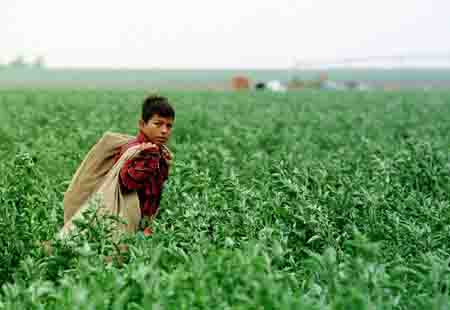
Another group that can relate to Vivian's strife is today's illegal immigrants. After coming to America undocumented, the immigrants must find some form of "under the table" work to sustain themselves, and usually a family. This desperation to make money often results in immigrants taking a much lower pay than the average American worker would, and many employers take advantage of that opportunity. Like Vivian as an orphan child, immigrants face prejudice and are sometimes deemed unwanted or useless. And similar to orphans, illegal immigrants are in a sense nomads, wandering until they find somewhere they are accepted, and where they can make a suitable life for themselves.
History has a habit of repeating itself. Though Vivian's story in Orphan Train is fiction, it is based in the reality that oppression awaited the Europeans being brought into indentured servitude, the city orphans forced to board a train to an unknown destination, and today, for illegal immigrants who cross the border, unsure of what lies on the other side.
Wednesday, December 17, 2014
Rain: Friend or Foe?

There is no perfect equaqtion for how to live life. There is no way to prevent change from happening; it just does. But this inevitability for change cannot be feared, it must be accepted. There is always an unpredictable element, and the racer must learn to confront it head-on. In the context of The Art of Racing in the Rain by Garth Stein, Enzo is talking of Eve as his "rain", meaning the factor that can either help or hinder. He realizes that a true racer embraces all of the obstacles that come along the way, and as a "racer at heart" he must do so as well.
Thursday, December 11, 2014
The Art of Reading a Book Narrated by a Dog
Reading The Art of Racing in the Rain by Garth Stein was a roller coaster of love and hatred, but mostly hatred. Let me recount to you the gradual decline of my mental stability with this book:

LAP 1
A book narrated by a dog? Cool! I bet he'll be really cute and dumb and like to run around in the rain and stuff.
LAP 2
Wait, what? Why is this dog smarter than me? Why does he want to be reincarnated as a man? "Racing in the rain" refers to actual racing in the rain???? SO MANY QUESTIONS
LAP 2
huh?
LAP 3
I thought this was a racing book, but now it's a cancer book...
LAP 4
I LOVE YOU ENZO
LAP 5
Why is Zoe smarter than me too??? Too many smart characters.
LAP 6
ZEBRA.
LAP 7
OMG. WHY IS HIS COUSIN FLIRTING WITH HIM. EW. MAKE IT STOP.
LAP 8
Enzo knows too much about life. He needs to go.
LAP 9
NOW IT'S A RAPE BOOK???? I CAN'T KEEP UP.
LAP 10
The Twins need to die forever. They do not deserve to be reincarnated into another being, they just need to die.
LAP 12
So now I guess this is one of those child custody books...
LAP 13
So much confusion.
LAP 14
Zoe is suddenly a child prodigy race car driver. Okay.
LAP 15
ENZO no don't leave me!!!!!
LAP 16
Italy...
LAP 16
ENZO IS A BOY. DYING BECAUSE CLICHES ARE DEATH. BYE.
My conclusion about this book is that Garth Stein wanted so badly for this book to be profound, that he decided to take all of the cliche plot lines of popular sad books and dumped them all into a single novel, hoping that at least one profound thing would come out of it. It didn't work, sorry Garth.
Subscribe to:
Posts (Atom)